
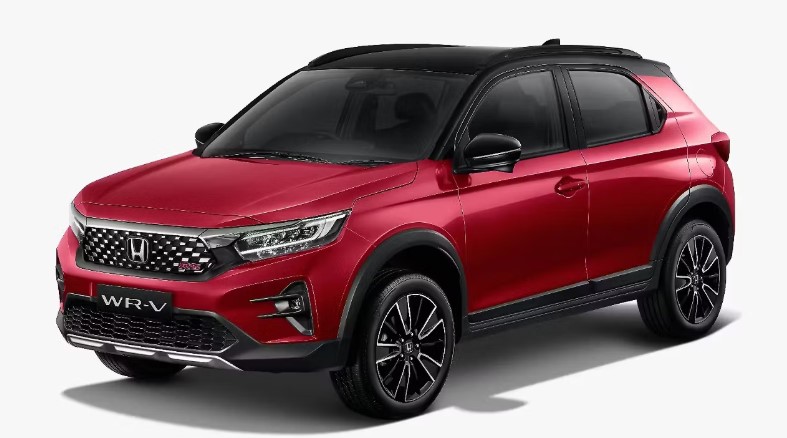
When Honda first unveiled the WR-V (Winsome Runabout Vehicle), it was positioned to carve a distinct niche in the compact SUV segment, targeting urban adventurers and families seeking both versatility and refinement. The first-generation Honda WR-V made its global debut in Brazil on March 15, 2017, closely followed by its launch in India on March 16, 2017. The vehicle immediately caught attention for its fresh and sporty stance, designed with inputs from Honda’s research teams in both Brazil and Japan, who took into account the unique preferences of young buyers across emerging markets. The new iteration has continued its journey with facelifts and technical improvements over the years, underlining Honda’s commitment to keeping the WR-V relevant and competitive.
The latest generation of the Honda WR-V was showcased with significant enhancements in Indonesia and is expected to be introduced in India by August 2023. The model is poised to address the shifting demands in the compact SUV category, which is marked by fierce rivalry and evolving customer expectations.
Honda WR-V: Specifications and Dimensions
The Honda WR-V has always been known for its optimal blend of compact urban-friendly dimensions and surprising interior spaciousness. In its latest guise, the compact crossover measures 3,999 mm in length, 1,734 mm in width, and stands at a height of 1,601 mm. A wheelbase spanning 2,555 mm provides for an intelligently packaged interior space, ensuring comfort for all occupants. With a ground clearance of 188 mm, the WR-V is ready for both city roads and rougher patches, increasing its all-terrain appeal. The 363-litre boot space is more than adequate for everyday cargo needs and weekend trips, reflecting the vehicle’s strong focus on practicality without sacrificing maneuverability.
Honda’s design choices are particularly apparent inside the cabin, where generous room in both front and rear seats stands out, along with thoughtful features like multiple bottle holders and rear seatback pockets for added convenience. While the previous Jazz’s ‘magic seats’ are omitted, the WR-V compensates with several useful interior storage solutions, making everyday usability its forte.
Honda WR-V: Design
Characterized by a dynamic silhouette and distinctive SUV elements, the Honda WR-V’s exterior design is a crucial part of its appeal. The bold front grille, flanked by sleek LED headlights and rugged body cladding, infuses the WR-V with a sporty and energetic vibe. The raised stance, accented by powerful wheel arches, chrome detailing, and strong shoulder lines, conveys an adventurous spirit that is at home in both urban jungles and offbeat getaways.
Inside, the dashboard is organized and thoughtfully designed using high-quality materials. The layout is complemented by a touchscreen infotainment system positioned for easy access and sleek visual integration. Chrome touches, modern trims, and plush upholstery options create a welcoming ambiance, while features like an electric sunroof in higher variants add a touch of luxury and openness. It is clear that Honda has sculpted the WR-V’s form and function to deliver both eye-catching looks and everyday comfort.
Honda WR-V: Safety and Features
Safety has consistently been a top priority in the development of the Honda WR-V. Across all its variants, the vehicle is equipped with dual front airbags and ABS (Anti-lock Braking System) with EBD (Electronic Brake-force Distribution) as standard. Higher variants further enhance occupant protection by adding side and curtain airbags, increasing safety for all passengers. For the latest models, Honda has integrated advanced electronic aids including Vehicle Stability Assist (VSA), Hill Start Assist (HSA), and ISOFIX child seat mounting points, lending peace of mind to drivers and families alike.
The recent inclusion of features such as rear parking sensors and camera, adaptive cruise control, lane-keeping assist, collision mitigation braking, and road departure mitigation reflect Honda’s ongoing efforts to embrace modern safety technologies. Rear-view cameras provide multiple viewing angles for safer maneuvering, while emergency braking and lane-departure systems proactively minimize road risks.
Recent safety testing data gives the WR-V positive marks, with certain variants achieving up to six airbags and a high safety rating, especially in well-equipped trims, underscoring the WR-V’s robust all-round safety credentials.
Honda WR-V: Engine and Performance
Under the hood, the Honda WR-V offers a choice of efficient and reliable engines tailored for different market needs. In the Indian market, two core variants define the lineup: a 1.2-litre i-VTEC petrol engine and a 1.5-litre i-DTEC diesel engine. The petrol engine produces 90 PS and 110 Nm of torque, mated exclusively to a 5-speed manual transmission. The diesel variant generates a robust 100 PS and 200 Nm of torque, paired with a 6-speed manual gearbox. Both powertrains are engineered to offer brisk and responsive performance suitable for daily commuter duties as well as longer highway journeys.
Internationally, the WR-V is also available with a 1.5-litre petrol engine derived from the Honda City, delivering around 121 PS and 145 Nm of torque. This engine is typically coupled with a CVT automatic, providing a smooth and relaxed driving experience ideal for urban traffic. The ride and handling benefit from the WR-V’s stable chassis and well-tuned suspension, which offers a composed, comfortable ride quality. The diesel’s impressive torque makes it especially adept at highway overtaking and carrying loads, while the petrol variant feels light and nimble for city driving.
Honda WR-V: Technology and Features
The WR-V’s cabin is designed to meet modern connectivity and convenience needs, starting with a user-friendly touchscreen infotainment system. The 7-inch touchscreen supports both Android Auto and Apple CarPlay, granting seamless access to navigation, music, and hands-free communication. Higher trims also provide voice command, integrated navigation, and smartphone integration features, bringing a tech-savvy experience to the compact SUV segment.
Automatic climate control ensures a pleasant environment for all occupants, while push-button start-stop and remote central locking make daily routines simpler. Convenience is further bolstered by one-touch electric sunroof controls, power-folding mirrors, and a rear defogger, raising the WR-V’s premium quotient. Honda’s DigiPad interface enhances user control, while steering-mounted controls enable distraction-free access to infotainment and telephony functions.
Mercedes-Benz S-Class: A Benchmark in Luxury and Innovation
Honda WR-V: Efficiency and Practicality
Fuel efficiency remains a hallmark of Honda’s small-capacity engines, and the WR-V is no exception. The 1.2-litre petrol variant delivers a real-world fuel efficiency of around 17.5 km/l, making it highly economical for urban users. The diesel version stands out with its impressive 25.5 km/l mileage, catering to long-distance commuters and those with high running needs. These figures are competitive within the segment, providing genuine cost-saving benefits without compromising on performance or driveability.
Practicality is embedded in every element of the WR-V’s design. The 363-litre boot is complemented by flexible interior storage and ergonomically placed controls, making it suitable for weekly grocery runs or outstation travel. Honda’s thoughtful packaging, such as multiple cup holders, large door pockets, split-folding rear seats, and accessible charging points, ensures that the WR-V can adapt to a wide array of daily and weekend duties.
Honda WR-V: Price and Availability
Honda has strategically positioned the WR-V to appeal to a broad spectrum of buyers seeking value without sacrificing features. The launch prices historically started at around Rs 7.75 lakh for the base petrol variant and moved up to Rs 9.99 lakh for the fully-loaded diesel version in the Indian market. The latest generation is expected to maintain a competitive starting price point around Rs 8 lakh, with incremental increases for additional technology and safety features in higher trims.
Availability spans both urban dealerships and Tier-II and Tier-III markets, reflecting the WR-V’s wide appeal. Honda has ensured that the WR-V remains accessible to customers by offering it in multiple trims, catering to those prioritizing cost-efficiency as well as those desiring maximum features. The WR-V is also available in international markets such as Southeast Asia and Latin America, with each region receiving minor market-specific adaptations.
Honda WR-V: Mileage
Mileage is a significant strength of the Honda WR-V, especially appealing in markets where fuel costs and running economy are key considerations. The 1.2-litre petrol model is rated at approximately 17.5 km/l, providing a strong balance between performance and economy for city dwellers. The 1.5-litre diesel model shines with an official figure of 25.5 km/l, positioning it among the best-in-class for fuel efficiency in compact SUVs. Real-world driving conditions report figures close to these claims, particularly in mixed driving scenarios, thanks to refined Honda engine technology and lightweight body construction.
Honda WR-V: Heritage and Evolution
The Honda WR-V’s journey is emblematic of the brand’s global vision and adaptability. Originating as a spin-off from the globally acclaimed Jazz (also known as the Fit), the WR-V was the first model to be developed specifically with the needs and preferences of emerging markets in mind. Since the 2017 debut, its fundamental Jazz-derived strengths of spaciousness and agility have been complemented by an SUV-inspired body and higher ground clearance, making it instantly more appealing to urban as well as semi-urban buyers.
A facelift in 2020 brought subtle yet significant improvements, maintaining its freshness against newer competition. Honda has continuously refined the WR-V’s platform, interior trim, safety tech, and powertrains, ensuring the model keeps pace with shifting consumer expectations. Its evolution mirrors broader automotive trends toward small, fuel-efficient, but robust vehicles that combine the best of hatchback practicality with SUV-like versatility.
Sales statistics over the years illustrate the WR-V’s enduring popularity, particularly in markets such as India and Brazil, where it responded astutely to the demand for practical family crossovers. The transformation of the WR-V, particularly its latest iterations in Southeast Asia and plans for the Indian market, reflects Honda’s commitment to innovation and local adaptation within the global compact SUV boom.